
YOU CAN'T OFFSET TIME
The evidence behind environmental offsets and the difference between compensation on paper and ecological replacement
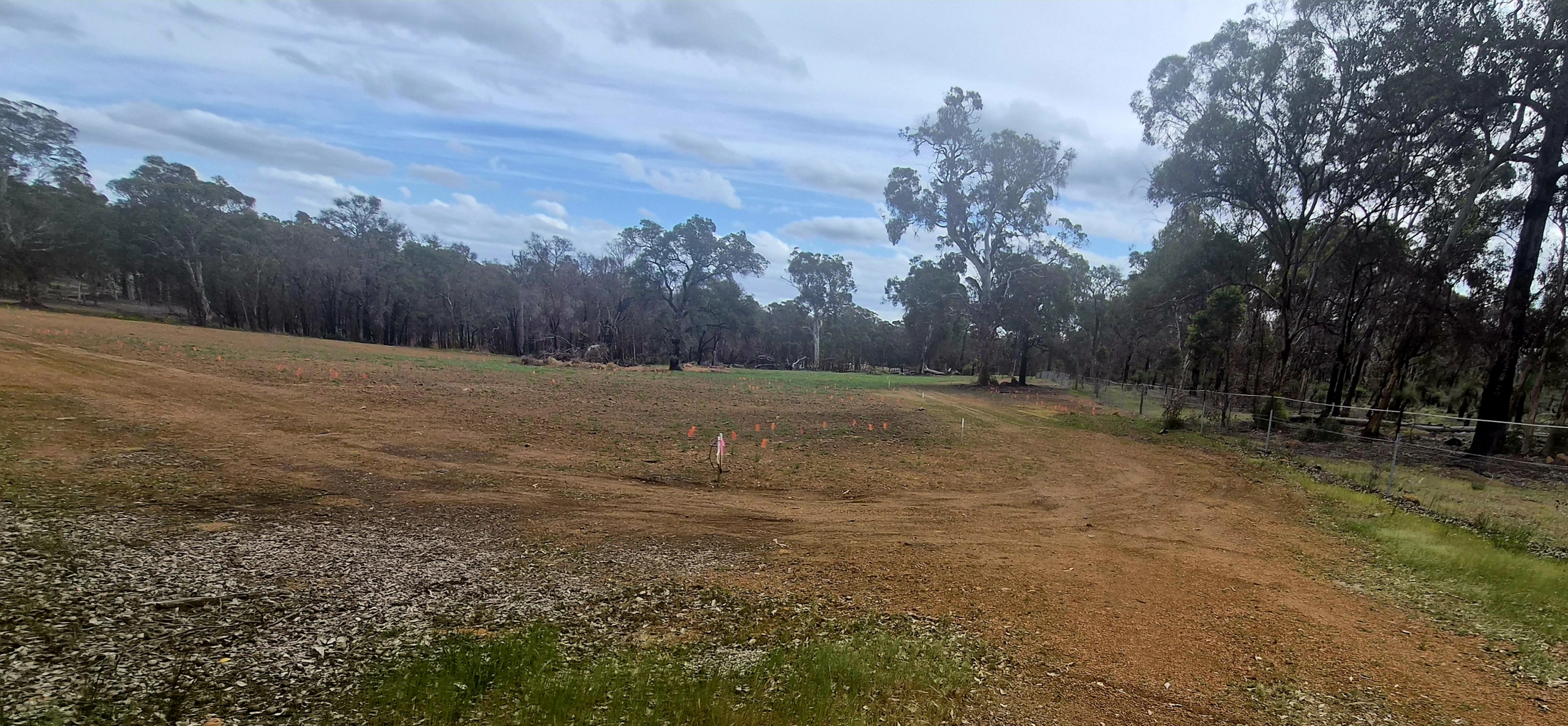
In September 2026, while travelling along Beach Road near Julimar, we came across young restoration planting on Chalice-owned farmland near the proposed Gonneville mine.
Rows of tiny native tubestock were planted across previously cleared land.
Planting native vegetation has value. But these seedlings led us to investigate a much bigger issue: what environmental offsets actually replace.
That matters at Gonneville because Chalice's own FY25 Sustainability Report states that research into restoration on company-owned farmland is intended to support Gonneville's "environmental offsets strategy and regulatory approvals" and anticipated WA and Commonwealth offset requirements.
The distinction at the centre of this investigation is simple.
A seedling represents potential future habitat.
Mature habitat represents ecological function that already exists.
They are not the same thing.
What the WA record shows
Western Australia has used environmental offsets for long enough for their performance to have been studied.
A peer-reviewed study examined 208 past and current environmental offsets associated with WA approvals between 2004 and 2015.
For the past offsets examined, the researchers found that at most 39 per cent delivered an outcome and could be considered effective.
An offset being imposed as a condition of approval does not establish that the intended environmental outcome was subsequently achieved.
Australia's 2021 State of the Environment report later drew on the WA evidence and warned that the effectiveness of offsets is often not evaluated after implementation.
It also noted that successful implementation of an offset does not necessarily demonstrate that "no net loss" of biodiversity has been achieved.
An offset can therefore exist, be recorded and even be implemented without demonstrating that the ecological value lost elsewhere has actually been replaced.
146 years — the Australian evidence
A major peer-reviewed Australian study examining ten years of biodiversity offsetting found an even deeper problem.
During the period studied, 21,928 hectares of native vegetation were approved for clearing while 83,459 hectares were established as biodiversity offsets.
The offset area was far larger than the area approved for clearing.
Yet the researchers estimated that no net loss in native vegetation area would not occur for 146 years.
More importantly, they found that predicted gains in habitat quality could be produced by substituting ecological attributes that were difficult to restore , including mature trees, with attributes that were much easier to restore, including tree seedlings.
The researchers concluded that those gains were not equivalent to the losses.
This exposes one of the fundamental weaknesses hidden by simple offset numbers.
A hectare is a measurement of area.
It is not a measurement of ecological age, habitat complexity or function.
A mature habitat tree cannot be recreated simply by planting a greater number of seedlings elsewhere.
The seedlings may have substantial future value.
But future potential and existing ecological function are not interchangeable.
Black Cockatoos — when habitat takes generations
For Carnaby's, Forest Red Tails and Baudin's black cockatoos, ecological time is particularly important.
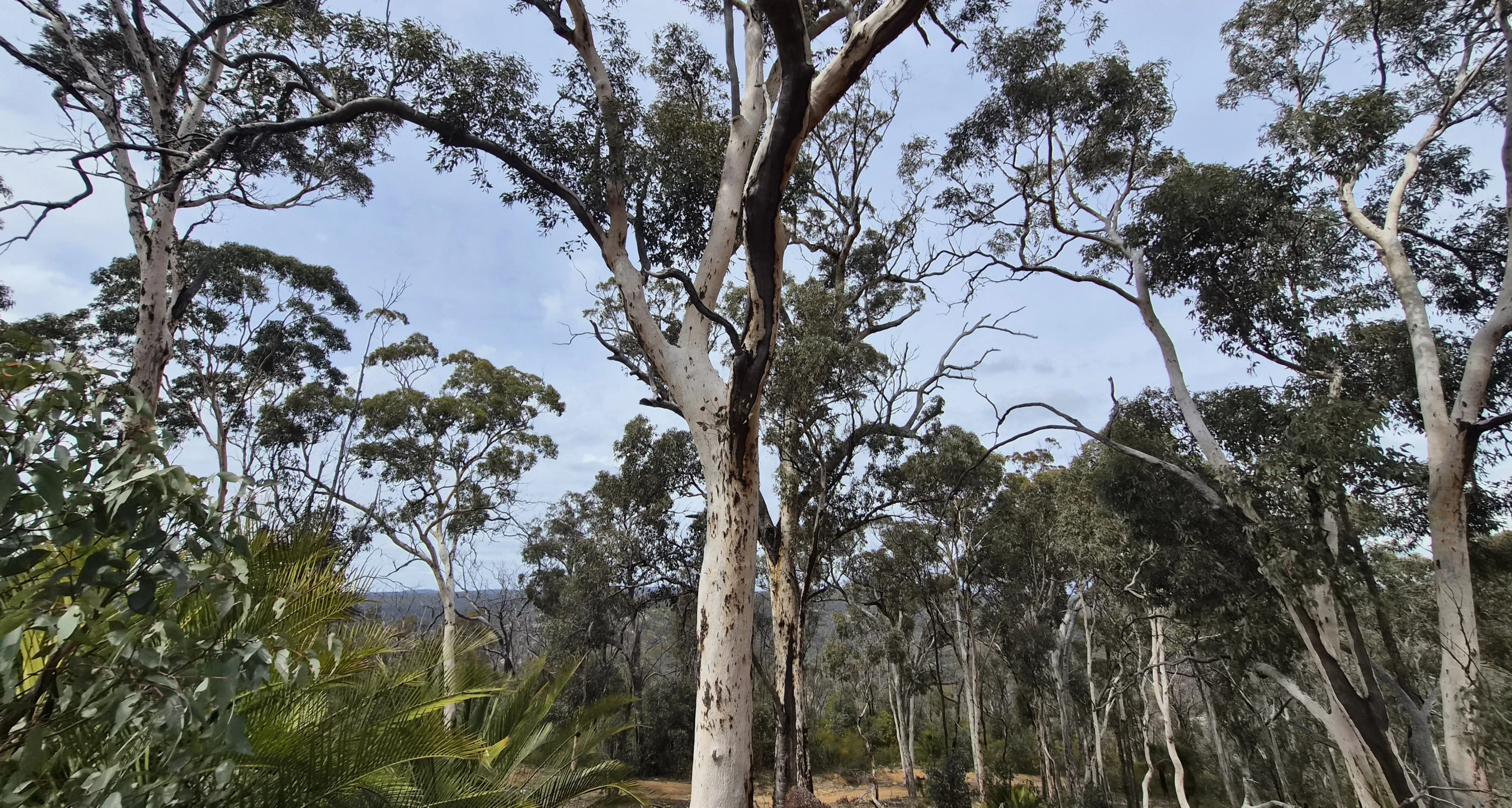
The species depend upon mature habitat, including large trees containing suitable natural hollows for breeding.
Those hollows are products of ageing, damage and decay over very long periods. They do not appear when a seedling is planted.
The final term review of the Carnaby's Cockatoo Recovery Plan recognises long lead times before revegetation delivers habitat benefit and states that the value of replanted habitat compared with retained habitat has not yet been established.
It also records that the rate of loss of natural black-cockatoo breeding hollows is considered likely to be unsustainable for persistence of the species.
Most significantly for the offset debate, the review reports that environmental offsets relying largely on changes in land tenure have resulted in a net loss of available Carnaby's cockatoo habitat.
That is a critical finding.
An offset mechanism existed.
Available habitat still declined.
Protecting existing habitat under a different tenure may reduce the risk of its future loss, but it does not create another copy of the habitat destroyed elsewhere.
And planting young trees does not immediately recreate the mature structures upon which hollow-dependent wildlife relies.
The Alcoa evidence
Western Australia already has a decades-long case study demonstrating how difficult it is to reconstruct a mature ecosystem after mining.
The Northern Jarrah Forest.
Alcoa has undertaken post-mining rehabilitation work there for decades. The critical issue is not whether vegetation can be established after mining. It is whether the original forest ecosystem has actually been restored.
A peer reviewed study published in 2024 examined 35 years of longitudinal data from Alcoa's mining areas against international ecological-restoration standards.
Against a five star target for full forest ecosystem restoration, the assessment achieved two stars.
The researchers found that the areas assessed had not returned to a state similar to the native reference ecosystem and were not on the expected trajectory towards full ecological recovery.
Two thirds of indicator plants were significantly under represented during early restoration and declined with age. Most plant species were effectively absent, including important structural species.
The study also identified a problem directly relevant to black cockatoos and environmental offsets.
Fundamental ecosystem features including natural tree hollows and fallen logs were expected to take well over a century to develop, inhibiting the functional return of fauna including conservation priority cockatoos, bats and reptiles.
This is not simply about whether trees grow back.
It is about whether the ecosystem comes back.
The lesson from decades of rehabilitation
The 2024 researchers reached a particularly important conclusion.
Based on the evidence examined, they warned that the promise of ecological restoration should not be used to justify continued destruction of the intact Northern Jarrah Forest.
That finding followed decades of rehabilitation experience.
A landscape can become green again.
Trees can grow.
Vegetation can establish.
None of those things, by themselves, demonstrate that the ecosystem removed by mining has been recreated.
Natural hollows, fallen timber, structural complexity and ecological relationships develop through time.
Some may take longer than a human lifetime to return.
The Alcoa evidence therefore exposes the difference between visible rehabilitation and demonstrated ecological recovery.
Planting is evidence of planting.
It is not proof of ecological equivalence.
CONTINUED BELOW
Part Two: What this means for Gonneville
PART TWO
The evidence examined in Part One matters because Gonneville remains under environmental assessment and substantial clearing is proposed. The WA EPA's published proposal information provides for clearing of up to 940 hectares within the mine development envelope, with further potential disturbance associated with the proposed infrastructure development envelope.
At the same time, Chalice has explicitly linked research into restoration on company-owned farmland with Gonneville's environmental offsets strategy, regulatory approvals and anticipated WA and Commonwealth offset requirements.
That makes the distinction between restoration and replacement particularly important. Newly planted vegetation may develop significant environmental value over time, but it does not begin with the ecological functions of mature habitat.
The problem of time
When mature habitat is cleared, its existing ecological function is lost immediately. Restoration starts at the beginning of a new ecological process.
The evidence in Part One shows how significant that difference can be. Australian offset research has identified time lags extending beyond a century, Carnaby's cockatoo recovery evidence recognises long lead times before revegetation provides habitat benefits, and research in the Northern Jarrah Forest has found that important ecosystem structures can take well over a century to develop.
Natural hollows, mature trees and complex habitat cannot be recreated simply by increasing the number of seedlings planted elsewhere. The new vegetation may become valuable habitat, but the years required for that to happen remain.
When the numbers don't tell the whole story
Environmental offsetting relies on accounting. Hectares, vegetation condition and predicted environmental gains can all be measured and used to compare a loss in one place with proposed compensation elsewhere.
But equal areas of land do not necessarily have equal ecological value. A hectare of young restoration is not automatically equivalent to a hectare of mature habitat, and predicted future habitat does not provide the same ecological function as habitat that exists today.
This is also why protecting existing vegetation elsewhere does not necessarily replace habitat that has been cleared. The vegetation being protected already existed. Indeed, the Carnaby's recovery-plan review found that offsets relying largely on changes in land tenure had resulted in a net loss of available Carnaby's cockatoo habitat.
An offset can therefore balance on paper while the amount or quality of habitat available on the ground still declines.
What the seedlings tell us
The restoration planting we came across on Chalice-owned farmland near Gonneville shows that native vegetation has been planted and a restoration process has begun. It cannot yet demonstrate mature habitat, natural hollows, complex ecosystem structure or the ecological functions that may develop there decades from now.
That does not make the planting worthless. It simply means that evidence of planting is not evidence that mature habitat has been replaced.
That distinction matters when Chalice itself has connected its restoration research with Gonneville's environmental offsets strategy.
You can't offset time
The evidence examined in this investigation does not show that restoration has no environmental value. It shows why restoration, compensation and ecological replacement should not be treated as interchangeable concepts.
Where mature habitat is removed, its existing ecological value is lost at that point. A restored landscape begins another process of development, and some of the characteristics of the original habitat may take generations to return.
Environmental accounting can assign value to that future restoration. It cannot eliminate the years between habitat loss and ecological recovery.
A seedling can become a tree.
But you can plant a tree today.
You cannot plant 150 years.
Information & sources
Gonneville Project — Environmental Protection Authority WA Project assessment and proposal information. https://www.epa.wa.gov.au/proposals/gonneville-nickel-copper-platinum-group-element-pge-project
Chalice Mining — FY25 Sustainability Report Gonneville environmental offsets strategy and restoration research. https://announcements.asx.com.au/asxpdf/20250926/pdf/06pqjzh3yt8bhv.pdf
May, Hobbs & Valentine (2017) Are offsets effective? An evaluation of recent environmental offsets in Western Australia. https://research-repository.uwa.edu.au/en/publications/are-offsets-effective-an-evaluation-of-recent-environmental-offse/
Gibbons et al. (2018) Outcomes from 10 years of biodiversity offsetting. https://researchportalplus.anu.edu.au/en/publications/outcomes-from-10years-of-biodiversity-offsetting/
Australia State of the Environment 2021 — Biodiversity Environmental offsets and management approaches. https://soe.dcceew.gov.au/biodiversity/management/management-approaches
Carnaby's Cockatoo — Final-term Review of the Recovery Plan Department of Biodiversity, Conservation and Attractions. https://www.dbca.wa.gov.au/media/6023/download
Northern Jarrah Forest rehabilitation research (2024) Long-term assessment of post-mining ecological restoration. https://doi.org/10.1111/rec.14236
WA EPA — Jarrah Forest Rehabilitation Peer Review https://www.epa.wa.gov.au/sites/default/files/PER_documentation2/Appendix%2070%20-%20Jarrah%20Forest%20Rehabilitation%20-%20Peer%20Review.pdf